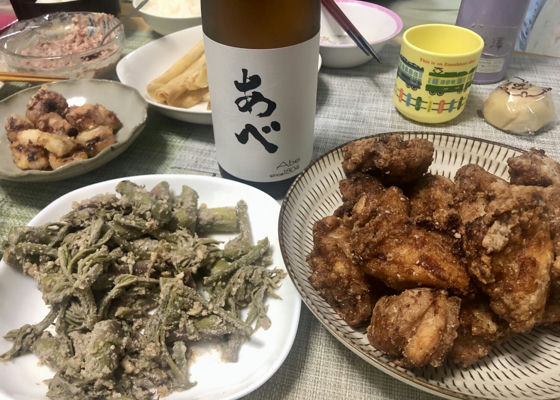
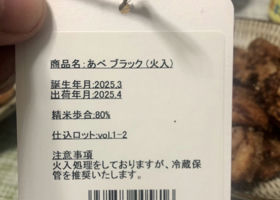
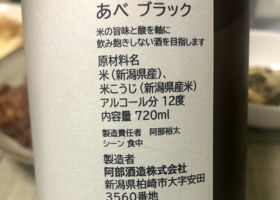
Abe, the vector is different from the old Niigata light and dry, but it has a modern flavor that makes the most of the acidity, and the main ingredient is the umami of the rice🌾, which has evolved over the years.
It has an alcohol content of 12, is light and easy to drink, and the 80% rice polishing ratio is surprising to see after drinking.
Serve with udo with walnuts, fried chicken, fried octopus, and fried potatoes.
This documentary was produced by a broadcasting station in Niigata and aired on Fuji TV affiliate in August 2023.
The documentary is titled "Kura wo Tsugaru: The Future of Sake Brewed by the Sixth Generation."
I had recorded it on my Blu-ray hard disk, but finally watched it and found it to be very good, making me want to drink more and more abeshu in the future.
Good evening, Jay & Nobby 🌇.
I enjoyed your documentary on Abbey. Watching it makes me curious about the future evolution of Abbey and makes me want to drink Abbey👍.
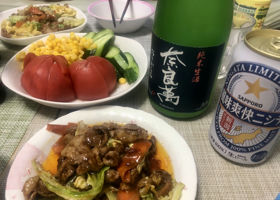
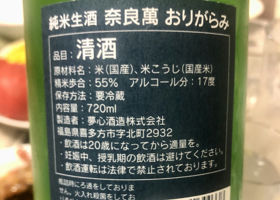
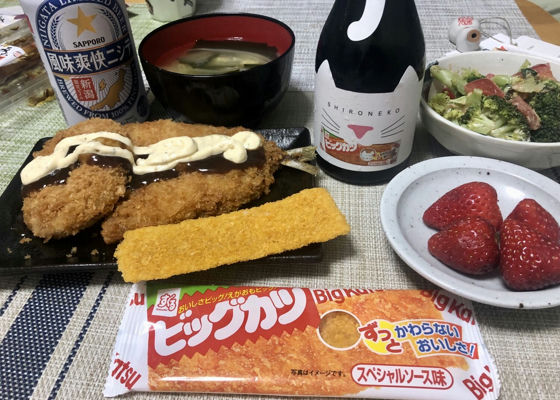
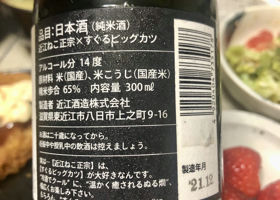
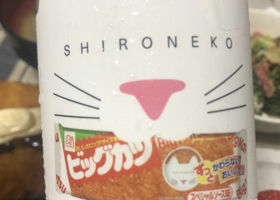
Omi Neko Masamune x Suguru Big Cutlet
This sake was purchased quite a while ago and stored in the vegetable compartment of the refrigerator.
Now that we have Big Cutlet, we finally take this opportunity to drink it.
As is sometimes the case, you can grow aged sake unintentionally.
The production date is December 2021, and it has been aged for 3.5 years.
I think it has a slightly savory aged aroma, though I am not sure if it is the original flavor or not,
I enjoyed it with everything from big cutlets to croquettes and fried horse mackerels👍.
I checked the brewery's website and found that they have closed their brewing business in June 2023.
Combined with the fact that they were unintentionally cultivating an aged sake, it was a cup 🍶 that made me feel the passage of time.
Hello, Takubon 😊.
I'm sorry for the trouble 💦.
I was accidentally put to sleep.
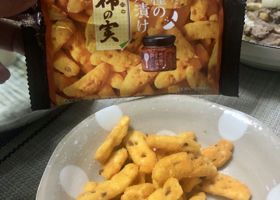
This is the first time I drank the series that goes well with the candy.
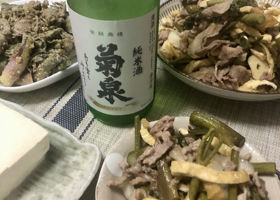
Junmai Unfiltered Nama-shu from Kikusen in Fukaya, Saitama Prefecture.
I have an image of Kikusen as a standard Saitama sake brewery, but in a good way,
The taste is smooth and has a raw, unfiltered character, but in a good sense, it has a sake-like, sake-like, and austere taste that is typical of Musashikuni and Saitama Prefecture sake.
It is served with stir-fried udo (udo radish) with walnuts and pork ribs from Niigata Prefecture.
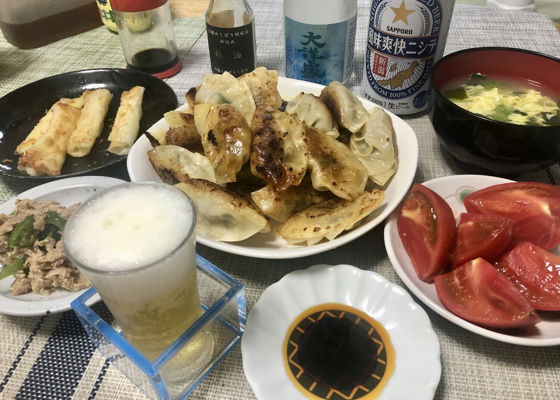
I just got home from work and today's dinner was,
My wife's homemade dumplings🥟.
She baked 25 of them for me👍.
They have a punchy, garlicky flavor.
With Sapporo's Niigata limited edition beer "Flavor Soukai Nishite".
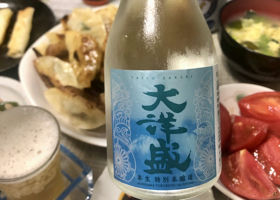
with Murakami's Oyomori.
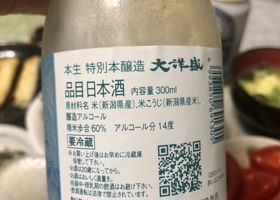
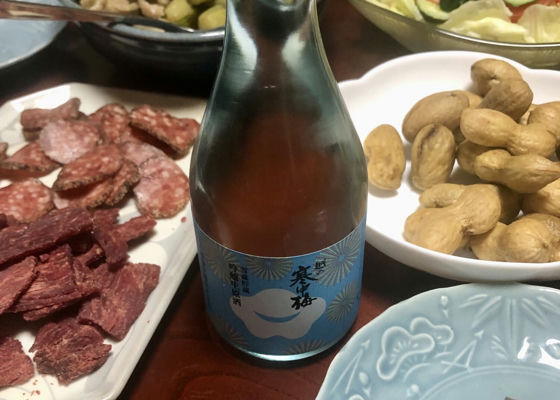
A 300ml bottle, it is a little different from Niigata's "light and dry" style, with a subtle acidity and light mouthfeel that would go well with seafood and fish.
Hi, Hi, Hi, Hi, Hi 😃.
I'm sure you'll want to go for a beer 🍺 first for the dumplings 🥟😋.
25 🥟 dumplings and a large ocean serving! That's a perfect combination 🤗.
Hiraccio-san, good evening 🌛🌛!
I just went to Shizuoka the other day and got a bottle of "Shizuoka Beer", but I'm curious about "Flavor Soukai Nishite" 🍺🥟.
Good evening Jay & Nobby😊.
If it's dumplings 🥟, I'll have a beer 🍺 first 👍.
It's a perfect combination of words.
Sake is also a good match without forcing yourself to accept the meatiness.
Gyve, good evening😊.
I like "Shizuoka Barley Wine" 👍.
I hope you can think of it as a regional Niigata Prefecture version of Sapporo's "Flavor Soukai Nishite".
If you see it, please do.
I think it would be great with Niigata edamame in the summer.
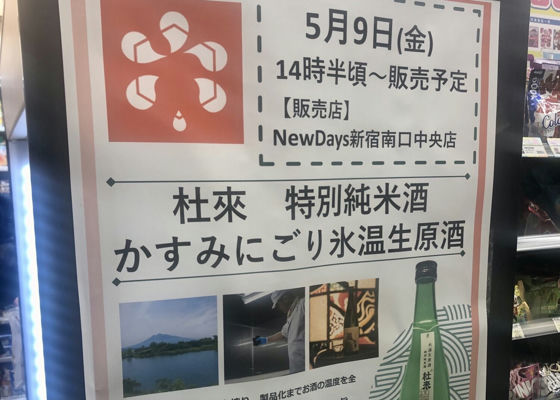
I was in JR Shinjuku station after work on Friday.
I came across a place where it was being sold through a project using hakobyun (same-day service by Shinkansen) and got it.
It has a clear and tasty flavor, with the curd that is often found in sake has been successfully removed.
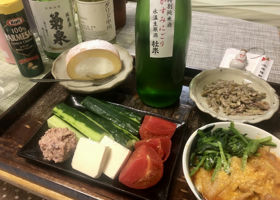
We paired it with grilled chicken with cheese, udo with walnuts, tomatoes, cucumbers, and Dojima rolls.
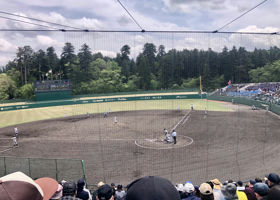
On this day, I watched the third round of the Niigata Prefecture high school baseball spring tournament at Nagaoka's Yukuyama Ballpark, and then returned to Saitama on the Shinkansen bullet train from Nagaoka Station.
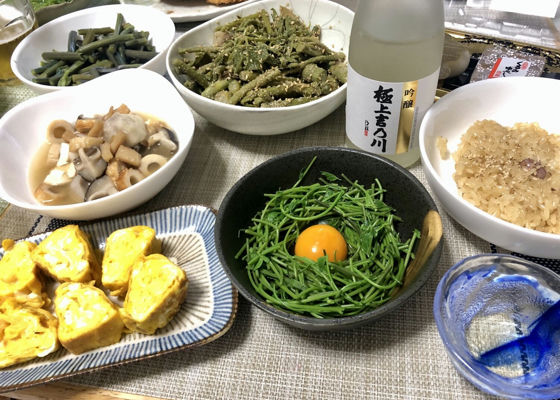
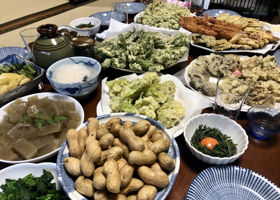
On the dining table, there was a variety of Niigata wild vegetables such as kinome (sprouts of trees) and udo (udo), which my wife and son had brought back from the countryside earlier and cooked for us, as well as nokpe (a type of rice cooked with soy sauce) and red rice flavored with soy sauce.
We drank a glass of Yoshinogawa, Nagaoka's sake.
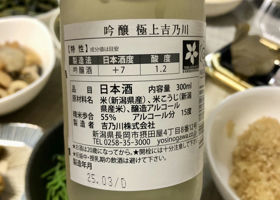
This superb Yoshinogawa Ginjo, 300ml bottle,
It is a very good, light and refreshing Niigata ginjo sake.
Dinner with my parents at my birthplace, second bottle.
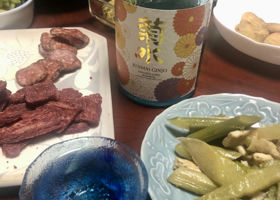
Kikusui's standard Junmai Ginjo-shu.
It doesn't have the flashy characteristics of Funaguchi, but it is well-balanced and mild.
We served udo stir-fried with pork belly, a dish with a delicious flavor and the strength of spring, etc.
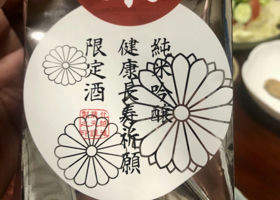
The "health and longevity prayer" was not specifically mentioned on the bottle or label, but only on the pouch.
A 300 ml bottle of snow-stored sake from Niigata Meisho Co. in rural Ojiya.
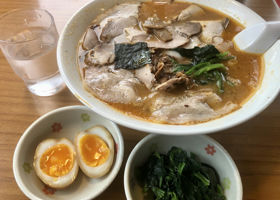
I was staying alone for another day on the 4th of GW, and after eating at a popular ramen restaurant in the countryside, I wanted to take my time walking around the city and have a local sake for dinner at my birthplace.
The effect of snow storage? Is it?
It was mellow, fresh, dark, 19 degrees, and delicious.
Even 300ml is enough to drink 👍
At the return home.
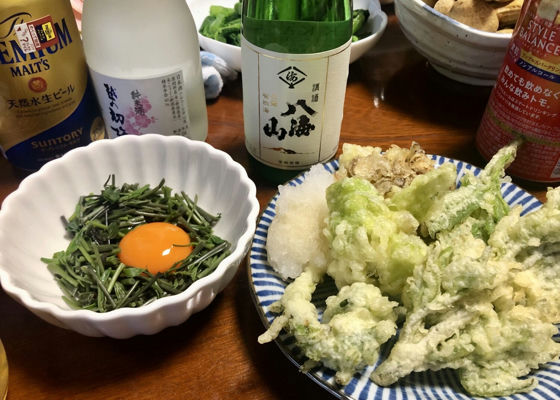
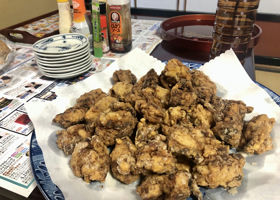
The main dishes include tree buds, a large amount of wild vegetables (butterbur sprouts, udo, and kogomi), tempura of maitake and shiitake mushrooms, fried shrimp, and fried chicken.
I have been posting a theory on Sakegawa for more than five years that Hakkaisan's regular sake goes especially well with mountain vegetables, and there is no doubt about it.
The smoothness, fullness, balance, and subtle bitterness of Hakkaisan's sake, which exceeds the standard for regular sake, is the best match for wild vegetable dishes.
It is delicious cold or warmed, and is especially versatile for springtime dining.
Good evening, Mr. Hiraccio 🍶.
Local sake is great with local wild vegetable tempura! ✨️
I'm jealous because I like to savor and drink sake by itself with tender tasting vegetable dishes as a snack 😊.
Hiraccio-san Good evening 😄The tempura of wild vegetables looks delicious. And Hakkaisan regular sake is good with wild vegetables! The bitterness of sake goes well with wild vegetables. I would like to explore how to use different types of sake with different dishes!
Good morning, Matsuchiyo 😊.
I also like to pair it with vegetable dishes, especially in spring when I get wild vegetables back home and it is bliss to pair it with Niigata sake.
It is a taste that is only available during this season, and I feel the joy of the arrival of spring.
Good morning, Sashu 😊.
I enjoy Hakkaisan regular sake every year because its lightness and bitterness go very well with wild vegetables.
I think Hakkaisan is especially made to go well with mountain foods and mountain gochisou (feast).
Good evening, Mr. Hiraccio.
I also had a glass of Hakkaisan Honjozo the other day and it is delicious. I am envious of your tempura of wild vegetables. I would be happy if I could enjoy tempura of butterbur with salt and a bowl of miso.
At the return home.
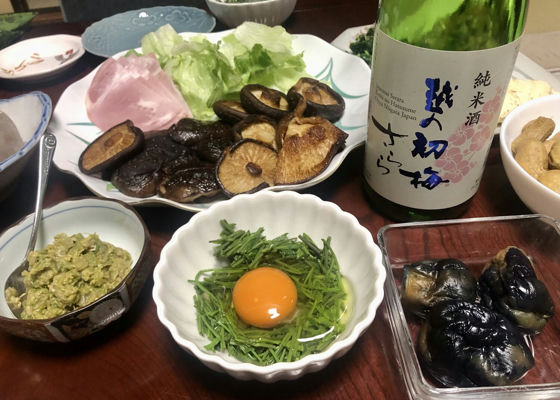
Junmai sake from a local brewery, Takai Shuzo's "Koshinohatsubai".
A rare and true gem among spring wild plants,
Ki no Mame. It is served with the yolk of an egg.
It is a sprout of akebi, and its bitterness and the breath of spring are irresistible.
Local shiitake mushrooms are also available.
The light and refreshing local sake goes well with this dish, and it is blissful.
Hi, Mr. Hiraccio 😃
It's great to have dinner surrounded by wild vegetables when you are back home 🤗I've never received any akebi sprouts🌱🥲 but I'd like to taste one while feeling the breath of spring!
Good evening, Jay & Nobby 🌇.
I am really looking forward to the spring wild vegetables back home.
Akebi shoots 🌱, these are rare and you can't get a lot of them, but many people in this area look forward to this one in the spring.
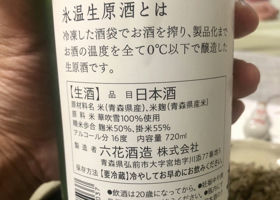
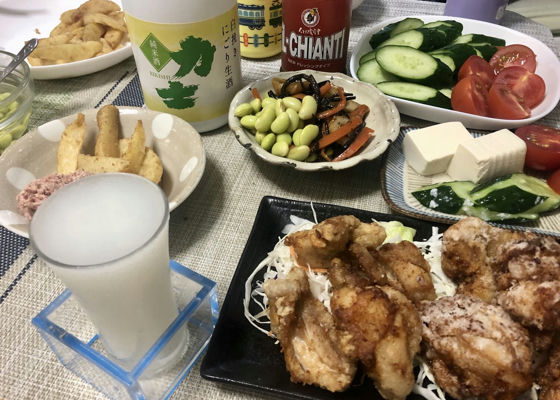
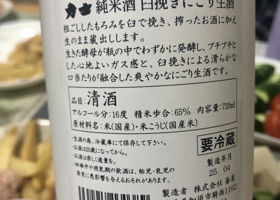
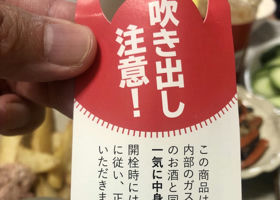
The bottle is not transparent and is covered with a white label, although it said to be careful of spewing when opening the bottle: ⚠️.
You can't tell how the water level rises!
When we opened the bottle very carefully, it did not spurt out, but we could see it was fizzing.
Mellow fresh fizzy mouthfeel.
Incidentally, due to the white label, we were unable to determine the approximate manachiri 💦.
As a result, we ended up with a 4-glass bottle.
Good morning, Manachie 😊.
I'm having trouble with this to be honest💦.
I've been alerted to the ballooning ⚠️, but I can't see how it's rising, and I can't see any indication of how far it will go before I manachy.
When I noticed it, I was manaciated, so it tasted good👍.
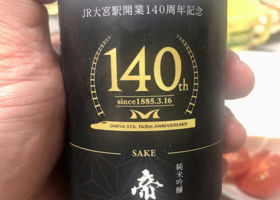
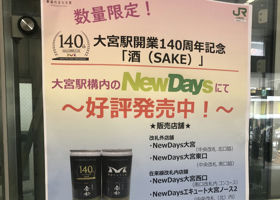
Limited edition can of Teisho (Mikadomatsu).
Commemorating the 140th anniversary of the opening of Omiya Station.
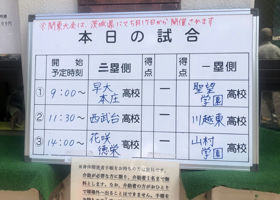
Yesterday, I went to Omiya to watch the Saitama Prefecture High School Baseball Spring College.
I found out about this limited edition can of Teisho from an advertisement posted in Omiya station. I think only a limited number of sake fans would jump on this, but it is a perfect advertisement for me👍😊.
Sharp junmai ginjo sake with a nice sharp aroma.
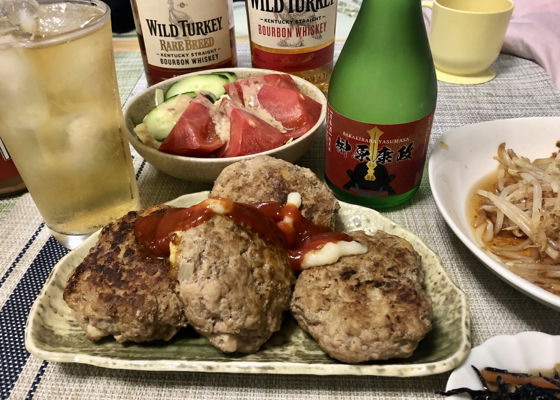
The Flower Dance,
Yasumasa Sakakibara" of the Tokugawa Warlord Sankei Series
As is typical of Hana-no-Mai, it is a clean junmai sake with no peculiarities and no strong character.
Our family's specialty
A meaty hamburger steak (Yoshiharu Doi's recipe).
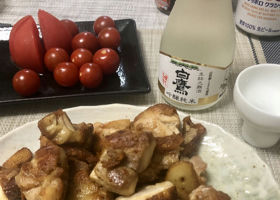
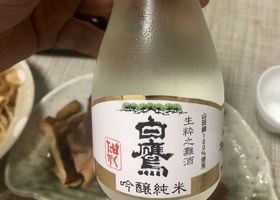
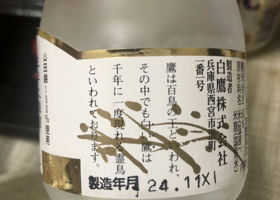
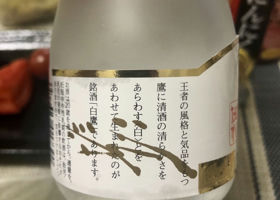
180ml bottle of Shirataka's "Super Special" Ginjo-Junmai
The bottle is so classic and prestigious that I couldn't help but acquire it.
Classical, the standard sake.
It is refreshing, moderate and elegant, with just the right amount of acidity.
When heated, it tastes fuller.
Serve chicken thigh simply grilled with garlic, salt and pepper as the main dish.
Garnish with wasabi.
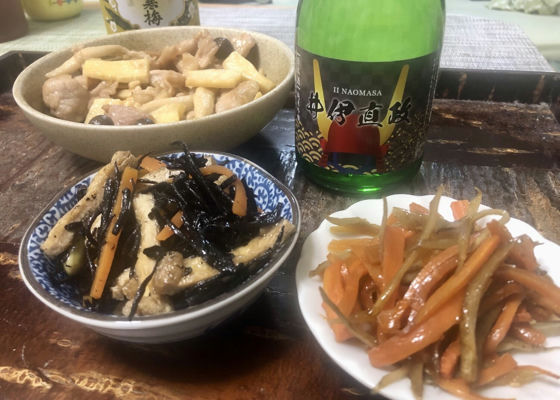
The Flower Dance,
Ii Naomasa" of the Tokugawa Warlord Sankei Series
Ii's red armor, the image of the first lord of the Hikone domain.
It has a clear and refreshing taste, and the flavor is a little strong for a Hana-no-Mai.
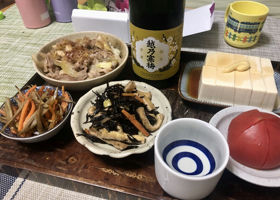
Koshinokanbai
A fantastic sake, the original premium sake.
I think the boom was at its height when the generation of sake drinkers was older than me, but I grew up in Niigata Prefecture until I moved to Tokyo as a student, and when I hear the name "Kanbai," I have a special impression of it, and the great name value gives me a feeling of longing.
Ginjo
Shin
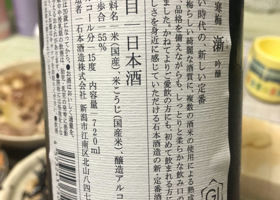
The label on the back says, "A new standard for a new era.
It is not particularly fruity or modern, but more in the classical range.
It is calm, with a nice soft umami, pale, and still dry aftertaste, a plain beauty.
It is not a particularly interesting sake, but it is also the Koshino-Kanbai of 2021.
A while ago, I read about it in a series of articles by Hidehiko Yoshida,
I read about it in a series of articles by Hidehiko Yoshida,
After Mr. Yoshida became the director of the judo club of Meiji University (in order because Naoya Ogawa, his senior at Meiji University, went into professional wrestling), he went to various places to scout for talent, and he was greatly supported by the alumni of Meiji University's judo club, especially the president of Ishimoto Brewery in Niigata, who was very helpful.
Furthermore, even during the time of the previous president, he was supporting Naoki Uemura, a junior member of the Meiji University mountaineering club,
He drank Koshino-Kanme the night before leaving for McKinley.
Hiraccio-san, Koshino-Kanbai used to be a high-end rare sake with a premium, didn't it? I remember my father getting a bottle of it and bringing it out on New Year's 🎍 with great care, but to be honest, I don't know why the amber-colored one is such a rare sake 😅.
Good evening, Harry 🌆.
Harry-san's family also had the rare sake then KANBEI appearing in their house. ❗️
Amber-colored Kanume, I wonder if it was colored because of distribution channel problems due to the difficulty of obtaining it 😅.
Jurian, good evening 🌆.
In the prefecture, it is called "Kanme", isn't it?
I guess you could say that the head of the brewery is a master of the region, and he backs up his juniors well 👍.
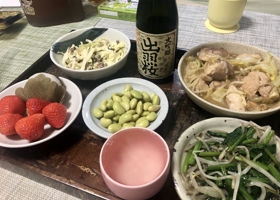
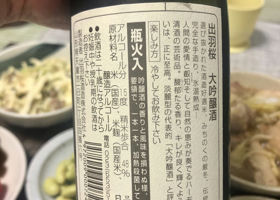
Dewazakura🌸 is a drink I like to drink in spring.
I like this 300ml bottle of 48% polished, fire-aged Daiginjo, which has a nice aroma but is sharp and dry.
The edamame-like thing in the middle is a secret happy bean from the same Yamagata Prefecture.
These secret beans, dried green soybeans from Yamagata Prefecture, are so useful that they can be substituted for edamame.
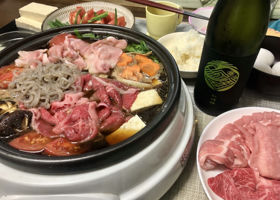
Nakadori Nagatoro Junmai Ginjyo Nama Nama-shu.
We think this is a notable brewery in Saitama Prefecture, and the quality of their sake seems to be improving year by year.
It is very close to becoming a national brand.
Juicy and fresh.
I bought a 4-goupe bottle.
With tomatoes🍅sukiyaki, a mixture of beef and pork.
The white can was usually a nice, refreshing sake, so I went back to the standard Funaguchi Kikusui can.
Released in November 1972, it is older than I am.
It is a masterpiece of sealing a mellow, fresh, delicious sake in an aluminum can, a product that will go down in the history of sake.
More than 300 million bottles have been sold.
It is also called the strongest sake in convenience stores. Tonight I got it at a 7-Eleven after work.
I tasted it again, and it is a masterpiece that combines freshness and richness.
I don't think it's a food sake, or a perfect accompaniment,
Tonight's (late at night, 😅) snacks were my favorite menu items, such as simmered pork cutlet, grated salmon roe, and fried horse mackerel, so the full-bodied Funaguchi Kikusui can was a good choice.
Thank you for the food!