Logo
SakenowaRecord your sake experiences and discover your favorites
tarotaro
埼玉県在住。やや辛、やや重、うまみどっしりみたいなのが好きです。

Registered Date

Check-ins

136

Favorite Brands

14

Sake Map

The origins of the sake you've drunk are colored on the map.

Timeline

alt 1alt 2
12
taro
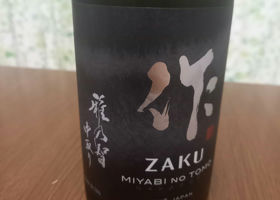
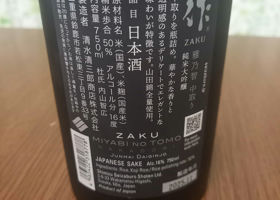
Saku Masanochi Nakadori Junmai Daiginjo The first time I drank the same bottle was two years ago. I remember being shocked when I drank one that had been aged for three years by an acquaintance. When I put my nose close to the glass, I could smell the gorgeous aroma of ginjo-type sake. I don't remember what it tasted like back then, but when I put it in my mouth, I was surprised to find that the aroma was exactly the same as it had been back then. First, there is the impact of the attack. It is thick and slightly gassy. Sweetness reminiscent of pineapple, pear, and lychee, and a firm rice flavor. The yogurt and cream-like aftertaste, pleasant bitterness, and refreshing sharpness come together in a well-balanced sequence. The quality of this wine is nothing short of amazing. With or without aging, it is as impeccable as ever.
Japanese>English
alt 1
17
taro
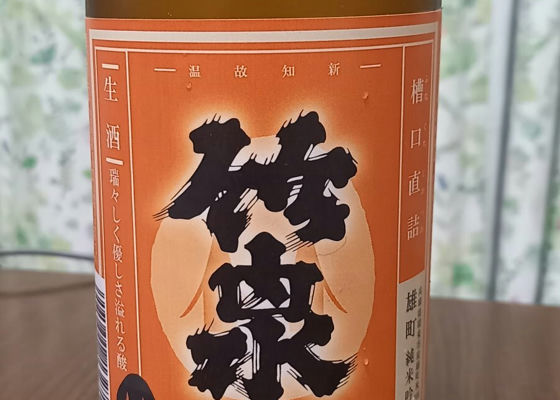
Takezumi Shabukuchi Naojime Omachi Junmai Ginjo Namaishu When poured into a glass, fine bubbles float on the surface. The aroma is of white grapes. In the mouth, as expected, there is a strong gassy sensation and a deep sweetness that is a mix of honey, chocolate, and muscat. What remains is a good amount of bitterness and pungency. This is followed by a strong alcohol sensation that passes through the nose. The smooth texture on the tongue can be attributed to the fact that it is made directly from the tank. I had only ever had the aged version, and was expecting the classical, heavy and spicy taste of the aged version, so I was shocked at the difference. However, it was also very tasty. This is a brewery that knows no bounds.
Japanese>English
alt 1alt 2
21
taro
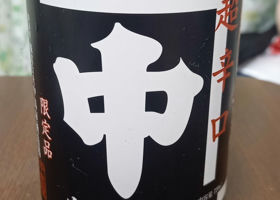
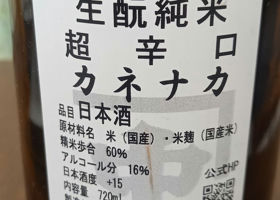
Nama yeast, junmai, super dry, kanenaka The aroma is slightly fruity and reserved. In the mouth, it is filled with a robust rice flavor as it thickens. Dry and classical. The bitter and pungent taste that lingers afterward is also very pleasant. On the second and third days, the corners are removed and it gradually mellows out. It is the first bottle in a long time that I felt it was a shame to finish.
Japanese>English
alt 1
21
taro
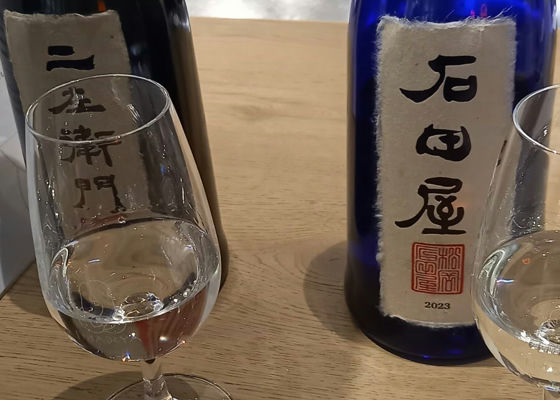
Kuroryu Ishidaya, Nizaemon At a corner bar in SUMIDA, Imanaya. We came here for a premium event. This is the first time to visit Ishidaya and Nizaemon. Ishitaya: The aroma is of white grapes. The taste is not too sweet and has a little bit of maturity. It has a pleasant sweet bitterness and a nutty graininess. It has a good sharpness. Fat Nizaemon The aroma is also grape-like, but it has more acidity than Ishidaya. It also tastes a little sour. It is thick, rich, and fruity. Both have a very elegant taste, but they are quite similar. I don't know if the price is reasonable or not, but it might be good to talk about the fact that I drank it.
Japanese>English
alt 1alt 2
18
taro
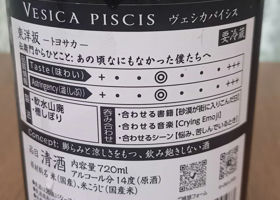
Echigo Den-emon Toyosaka The nose has a strong grape-like aroma. When poured into a glass, it gives off a fizzy sensation. When you take a sip, you are first surprised by the very strong acidity. It is not often that such a strong acidity comes out on the whole surface of a sake. After a delay, a moderate sweetness arrives, and the palate is filled with a lingering bitter astringency. The impression is light, fresh and dry. Overall, it is well-balanced and never gets old. The Mishaguchi I drank once before was full of sweetness and punchiness, and I thought it was a brewery that specialized in making such sake, but this time, the impression of acidity was strong anyway. It seemed that Mishaguchi is not a one-size-fits-all brewery, and I was eager to try their other sake as well. The sake is brewed in very small quantities by a single person, and as the label indicates, one can sense the tremendous care that goes into making it. The price is a little high, but that is acceptable if the sake is this unique. In these days when it seems that there are many sake with a somewhat similar taste, this is a bottle that makes you happy with its unique impact.
Japanese>English
alt 1alt 2
24
taro
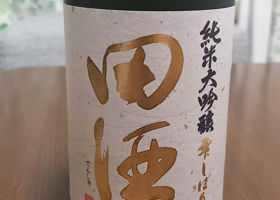
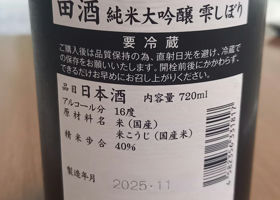
Tasake Junmai Daiginjo Shizuku Shiboribori The aroma is stronger than that of regular Tasake. In the mouth, it is thick and overwhelmingly smooth. The sweetness is like white grapes and chocolate, followed by a strong alcohol taste that leaves the nose. The lingering bitter and pungent aftertaste is also pleasant. It has a very noble taste, and if you are not told, you would not even recognize it as tazake. You can drink it as much as you like. It reminds me of Kinjaku no Hisho, which I drank a long time ago. Of course, this sake is delicious without any complaints. However, I am not being too modest in saying this, but I still prefer the special junmai that I am accustomed to drinking.
Japanese>English
alt 1alt 2
20
taro
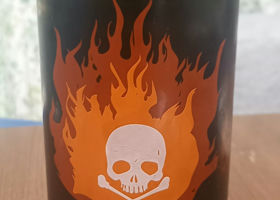
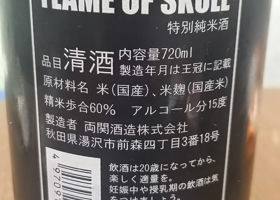
Ryoseki Shuzo FLAME OF SKULL Special Junmai Sake This sake may have a strong label, but I can't help but think that it probably detracts from the sake. The direction of the label and the taste are similar to "Shinigami," but it is even easier to drink than that. The initial aroma is mature, like that of soy sauce. In the mouth, the soft matured taste spreads with thickening, and is filled with a pleasant sweetness like whiskey or honey. The bitterness and astringency of the aftertaste are just right, and the rice flavor is also well pronounced, which is also highly appreciated. The overall flavor is soft, so it can be recommended for those who do not like aged sake. On the second day, it becomes more angular and milder. Personally, I really liked the taste and found it to be an unexpected bargain.
Japanese>English
alt 1
alt 2alt 3
27
taro
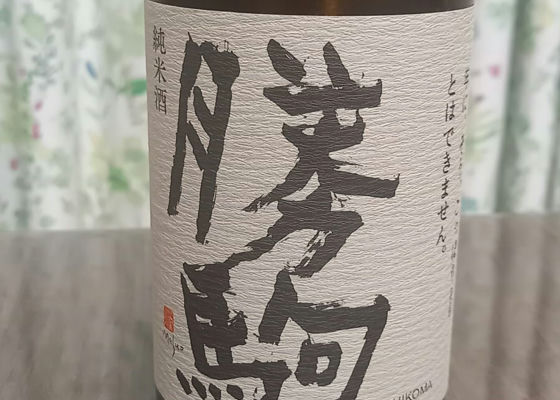
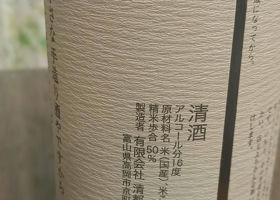
Katsuma Junmai-shu Katsikoma, a well-known hard-to-find sake, was purchased at Kimishimaya using points. The nose has a slight muscat aroma. In the mouth, the banana aroma, alcohol smell, gentle sweetness, richness, and umami of rice can be fully felt, and although the aftertaste is bitter, the overall balance is good, making it suitable as a food sake. I tried drinking it at different temperatures, cold, room temperature, and warmed, but I think it is best served at room temperature. However, while it is certainly delicious, I personally feel that it may be too much for its popularity to soar to that level.
Japanese>English
alt 1alt 2
23
taro
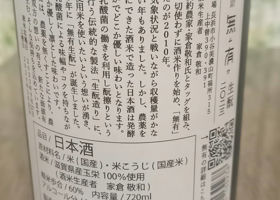
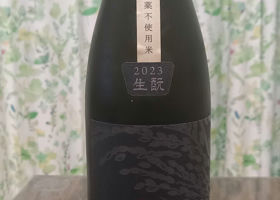
Shichibonjari Muu Namaishige (No description, but the specs may be Junmai Ginjo) The nose has a faint aroma of rice. In the mouth, there is a faint sense of gas, a fairly firm acidity, and a full-bodied flavor, and the aroma of lemon wafts through the air with a gradually spreading umami. The aftertaste is bitter and sharp. Overall, it is quite dry and the impact of the acidity is so strong that I personally would have preferred a little more sweetness, but strangely enough, I never got tired of drinking it. The rice used in this bottle is pesticide-free, and one can sense the strong commitment of the brewer.
Japanese>English
alt 1alt 2
20
taro
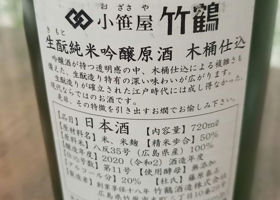
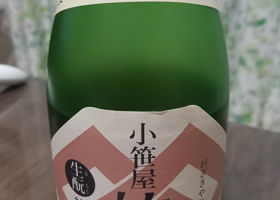
Kosasaya-Taketsuru Junmai Ginjyo Genzake Wooden Oke Brewing The sake has a golden color. The nose has a whisky-like aroma with a hint of maturity. The palate is filled with condensed nutty and bitter chocolate-like sweetness and umami. It is quite peculiar, but also has a strong umami. It also has the refreshing feeling of a junmai ginjo, and is probably easy to drink for a sake of this type. It does not have much of a wooden barrel feel to it. As it tastes better, the rich aroma spreads and the sweetness becomes mellower. The aroma that passes through the nose becomes even stronger. The strength is only 20 degrees, so if you keep on drinking it at a good rate, it will turn around quite quickly.
Japanese>English
alt 1alt 2
29
taro
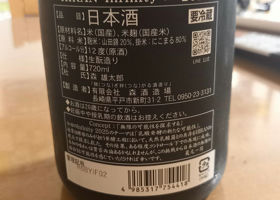
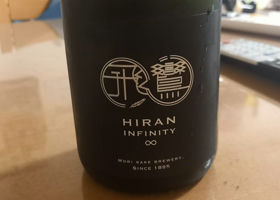
Hiran INFINITY∞2025 It is strange to say, "If you don't have Shinsei, just drink Hiran INFINITY," but this "2025" is quite similar to Shinsei. According to the brewer, the lactic acid bacteria that were supposed to finish their role in the mother liquor survived to the yeast and continued lactic acid fermentation. In the mouth, the impactful citrus and yogurt-like sweet and sour taste is pleasant, and it finishes with a fairly strong bitterness. Of course, it is not enough to resemble Niimasa, and there is no need for other sake breweries to aim for Niimasa's taste, but it is interesting to see how similar they are, even if only by coincidence. The lack of wooden vat and the stronger acidity make the similarity ratio between this sake and Shinmasa about 80%. The low alcohol content of 12% may also be a factor. It was very tasty and interesting to drink.
Japanese>English
alt 1alt 2
25
taro
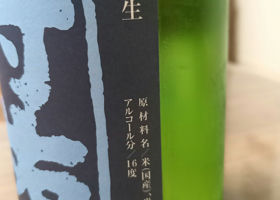
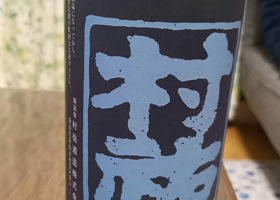
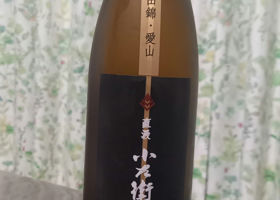
Murayu, dark blue Ruri label I recently drank this sake for the first time at an izakaya and got the impression that it could be the next Shinshu Kamerei, so I liked it and drank it again at home. The color is slightly yellowish, and the top aroma is like that of muscat. In the mouth, it is thick, with a cream-like sweetness and a hint of maturity. The taste is quite strong. When swallowed down, the nose is filled with a strong alcohol and cemedine aroma. It finishes with a strong bitter taste. The taste is rather peculiar, and although it is good up to the first or second sip, it becomes boring after that. The impression was quite different from when I drank it at the restaurant. I would like to try other types as well, as they seem to have different flavors depending on the label.
Japanese>English
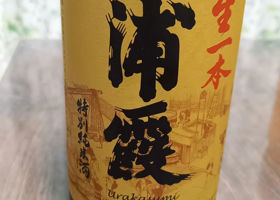
Urakasumi浦霞生一本
alt 1alt 2
20
taro
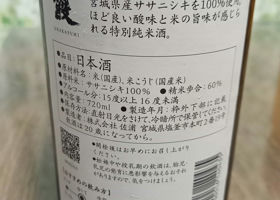
Urakasumi Tokubetsu Junmai Shu Nama Ippon Urakasumi's well-known special junmai sake. The moment it enters the mouth, the impactful sweetness and full umami rush in, followed by a slightly strong bitterness, sourness, and a hint of acidity. It has a classical taste that is distinctly different from the sweet and fruity flavors that are so popular nowadays. It may sound contradictory, but it is sure to satisfy those who like dry sake as well as those who like it clean and mellow. It was awarded the gold medal in the premium lukewarm category of the Heated Sake Contest 2024. It certainly looks good when heated, and the full flavor of the rice comes out. The recommended temperature range on the label is wide, but my personal recommendation is room temperature. It is extremely cost-effective and makes me really want to cherish this kind of sake. There are not many cases where Sasanishiki, which is famous as edible rice, is used as sake rice, but drinking this sake will convince you that it is good for both. It is very tasty.
Japanese>English
alt 1alt 2
21
taro
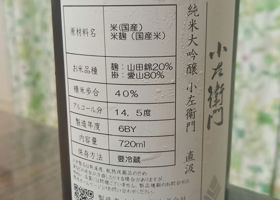
The top aroma has a discreet floral sweetness and a faint alu odor. In the mouth, there is a soft gasiness, dense nutty sweetness like honey with a strong impact, thickening, light acidity, and a hint of aroma similar to that of Shinshu Kamerei. It has a silky texture, clear and mellow, and finishes with a pleasant sweet bitterness. It is so uncommonly delicious that you will finish the whole bottle at once. If you are not sure about the price, buy it immediately without hesitation. This is a superb bottle that shows off the bottom power of Kozaemon.
Japanese>English
1