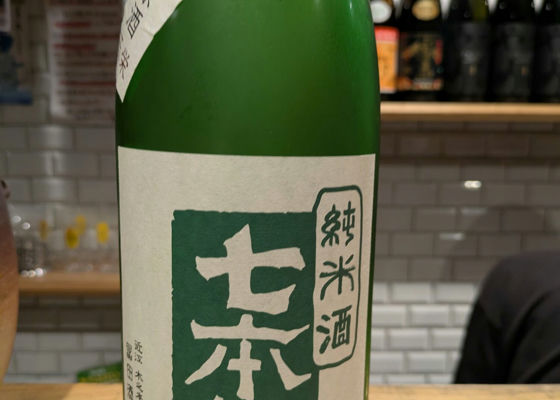
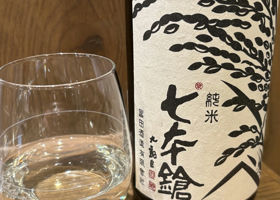
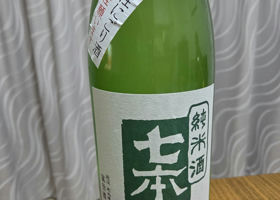
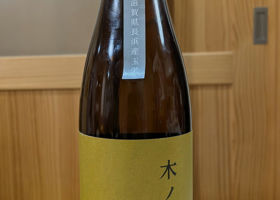
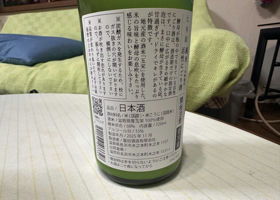
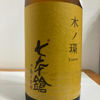
Sake made from a variety of sake rice called Watanobune.
The aroma is mild, with a hint of woodiness in a refreshing alcoholic aroma 🌳.
The color is yellowish.
The taste is constant from beginning to end, with a hint of bitterness, but with a delicious rice flavor.
It was delicious!
Orihunter 2️⃣ 2️⃣th
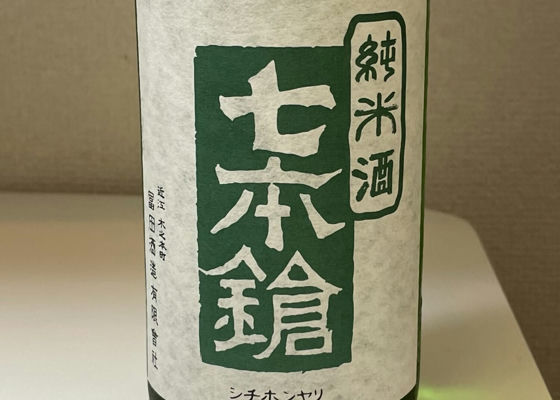
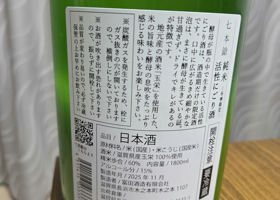
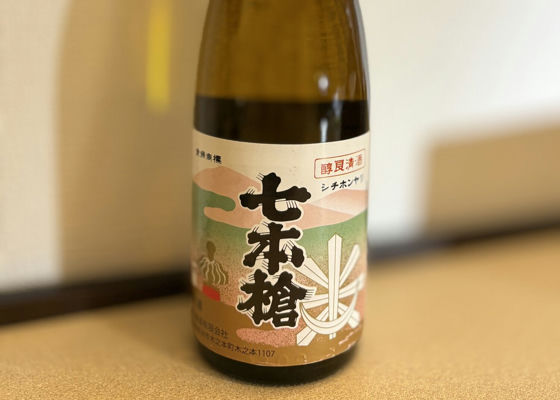
I got a bottle of Shichibonjari's active nigori again, as I did last season 😀.
My impression of last season was that it had acidity from the activation and a dry sharpness, but I was surprised when I had it this time 🤣.
It has a sharpness and a robust feeling, but the umami and sweetness derived from the rice was well conveyed 😇.
I wonder what my impression was last year 🤣.
I don't know if the taste has changed this year or if our family's taste in sake has changed a bit, but we enjoyed it very much anyway 😇
Good evening, Yasubeyesan 🌛As an Orihunter, I can't miss this one 🍶I had the one from last year for a drink outside and it was delicious, but it seems to have evolved even more 🤤I guess I should have brought it with me😅.
Good evening, Nao888 😀
This time of year there are so many great nigori that it's hard to decide what to bring 🤣.
This season I try to bring you nigori that I have never had before, so there are a lot of nigori that I like that I gave up on😅.
Good evening, Yasube!
I've been curious about this one since last year, but for some reason I can't seem to find it 🤔! I've been curious about it since last year 🤔 but for some reason I haven't come across it 😓I'd like to try it this year ‼️
Jay & Novy, hello😀 I wonder if there really are regional differences in how easy it is to get certain sakes?😅 For me in Kansai, Shiga sakes are pretty easy to find😀 I really want you two to try this Katsuyuki Nigori😇
Yasube-san, good evening 🦉 You've already had 22 bottles? 😳 That's impressive! 😆👍 From what I've seen, this year's seems closer to the taste of the Seven Spears I imagined 🤔 Being able to tell the difference is the real joy of drinking it every year!
Pon-chan, good evening😀 In my mind, Nanabon Yari sake has always had a robust flavor among Shiga sakes, but this year's nigori even had a hint of sweetness within its umami😀
I'm already 8 minutes drunk after reviewing the series of changes without even eating a bite to eat.
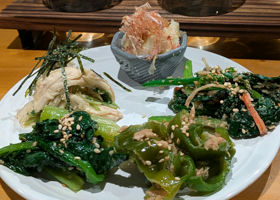
Having tasted the depth of Shiga sake, I decided it was time for a sake that would go well with Obanzai, so I went with Shichibon-Yari!
It has a delicious acidity and umami that is typical of Shiga sake.
It has just the right amount of astringency and pungency to give it depth, but also a pleasant sweetness that is not overpowering.
The well-balanced umami taste that does not go too far is as expected.
Finally, I can start to eat the five kinds of obanzai (side dishes).
It has a sweeter aroma than one might expect, and the taste has the sweetness and umami of rice with a hint of acidity from the gas, and although it is not dry, it is very tasty and finishes well.
It was the first time this year that we patrolled in Imaya 🫡.
The first drink was today's recommended sake "Shichibonspear" from the lunchtime drinking set.
It is a junmai sake made from rice grown without pesticides. At first, there is a slight aroma of alcohol. I don't like anything with a strong alcohol smell, but this one had a pleasant aroma that I liked!
It was a very delicious sake with the flavor and sweetness of rice 🥰.
#Imadeya Chiba Ekinkanaka
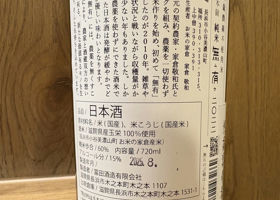
Junmai Shichibonjari made with all pesticide-free rice. This is a collaboration with rice farmer Iekura-san. The toji (master brewer) is a local Nagahama senior of MUBE's owner-chef Izumi, and it is quite good that this sake is mellow but dry and free of cloying taste!
It is said to be matured for a year and a half and goes well again with homemade crow's feet!
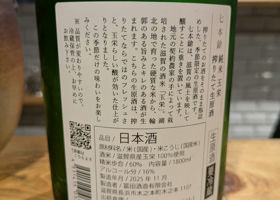
Ingredients: rice (domestic), rice koji (domestic)
Rice used: "Tamakoe" grown without agricultural chemicals in Shiga Prefecture
(Rice produced in Oma-no-Iekura, Minoyama-cho, Kotani, Nagahama City, Shiga Prefecture)
Rice polishing ratio: 60
Strength: 15
MUBE
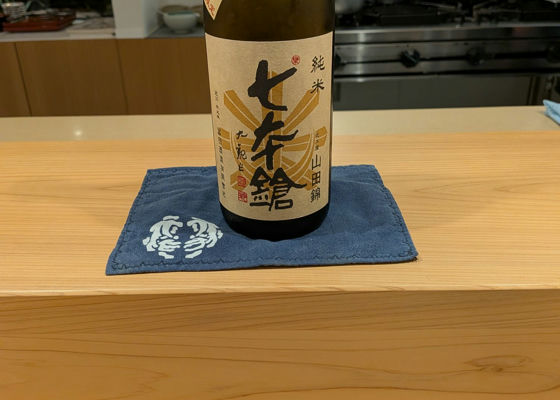
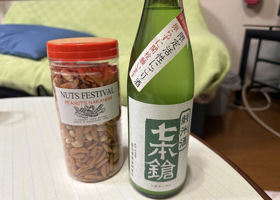
Today was mainly crab, so I was very happy to have it with the Hitakami mellow dry Junmai Ginjo & Drunken Whale Junmai Hachitan Nishiki. Well, I was a little short on drinks, so I tried a heated bottle of Shichibonshari, which I had wanted to try for a while. It was wonderful. I respect the versatility of this sake to suit any dish, but when I added a little cold sake to the heated sake, the sweetness in the back of the bottle came out while the crispness of the raw sake was outstanding, and it was very tasty on its own.
Good evening, Mr. Shouting Butterfly 😃Look forward to working with you again this year: 🙇🏻🙇🏻♀️
Shichihonjari! It's so good 😋Kanzake 🍶 with cold sake 🍶 you seem to be an expert ‼️ ummah!
Jay & Novy, Happy New Year! I learned how to drink both warmed and chilled sake from someone who runs a sake warming specialty shop 😊 Looking forward to another great year with you!
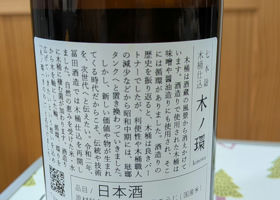
Returned home for a family drink. It had no acidity, a slight bitterness, and a nice sharpness. It was delicious, perhaps the flavor of the wooden vat. It was the kind you can drink like water, and everyone raved about it.
Happy New Year!
I hope to continue drinking sake in a delicious and healthy way this year!
The first sake of the New Year was served at a ryokan (Japanese inn) where I was traveling.
We had a delicious meal and a glass of wine!


 蔵元から直接学べる日本酒のオンラインテイスティングイベント「SAKE(日本酒)x NOMY(学)」の第8回が6SAKETIMES | 日本酒をもっと知りたくなるWEBメディア
 日本酒・ワイン・チーズを中心とする、酒類と食の専門知識を提供している専門校「インフィニット・酒スクール」主催のSAKETIMES | 日本酒をもっと知りたくなるWEBメディア
 若き日の魯山人も逗留 蔵元の冨田酒造は天文年間の創業。日本最大の湖、琵琶湖の湖北に構える国内でも最古の歴史を誇SAKETIMES | 日本酒をもっと知りたくなるWEBメディア