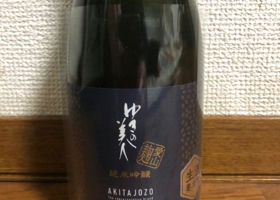
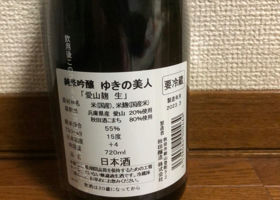
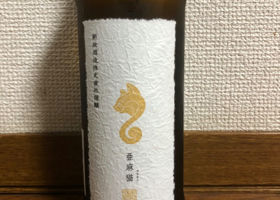
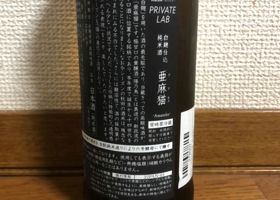
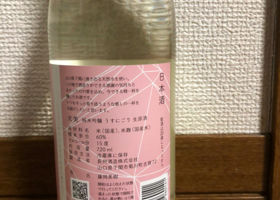
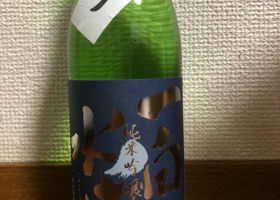
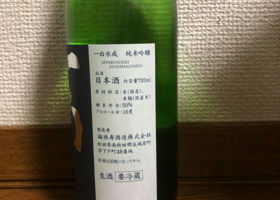
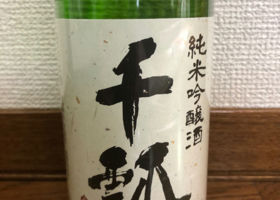
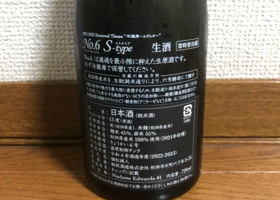
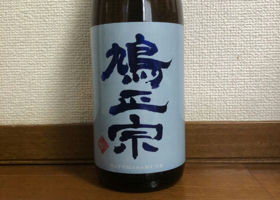
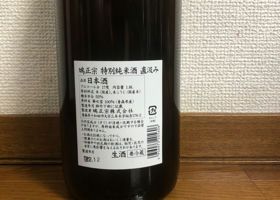
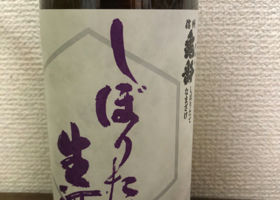
I forgot to upload it.
The combination of sourness and sweetness is more exquisite after a while than right after opening the bottle, which I prefer.
My wife raved that it tasted as good immediately after opening the bottle as it did afterwards.
Suddenly it got cold again, so I went to the liquor store looking for a sake that could be drunk warmed up.
I opened the bottle immediately and drank it heated as planned, and was very satisfied with the taste.
This sake can be enjoyed at a wide range of temperatures, so I will try drinking it cold on hot days.
This time, following the previous Tobiroki, it is another sake from Fukushima Prefecture. It is probably the most expensive sake in our stock in terms of list price.
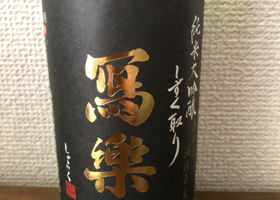
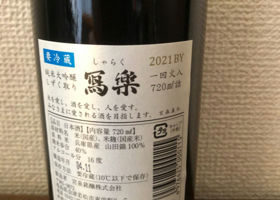
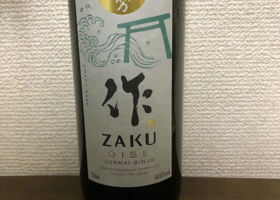
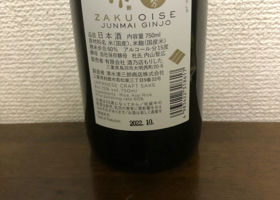
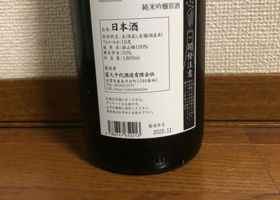
It is "Sharaku Junmai Daiginjo Shizuku-tori".
My impression of this sake is not a common one, but it is delicious! That is the only word I can use to describe it. The ginjo aroma when the bottle is opened is not so strong, but when you put it in your mouth, I am not sure if the expression is correct, but you can feel the softness and gentleness of the sake, and it passes through your nose beautifully.
I can't say whether it tastes good because it is expensive or whether it is expensive because it tastes good, but in any case, I think it is a very satisfying and enjoyable sake.
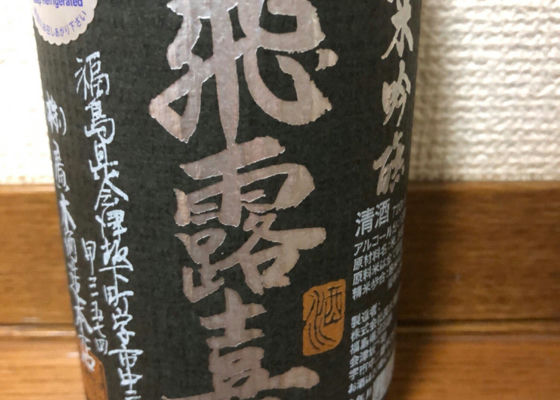
This is another sake that I have not had for a long time, Tobiroki.
Although it had been sitting for quite a while since I bought it, it did not change its taste and was very tasty.
The taste is also very good, and I can fully understand why it is a popular sake.
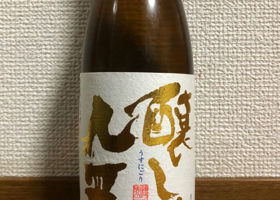
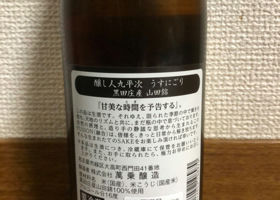
This will be the first Kuheiji in a while. This is the first time for me to drink a light nigori, and this one is a return gift from my hometown tax payment.
My impression is that it is delicious.
It is a very well-balanced sake, and I never get tired of it. Although it is a sake, it does not make a strong statement that it is a sake, and I felt that it is the kind of sake that makes me want to drink more and more of it.
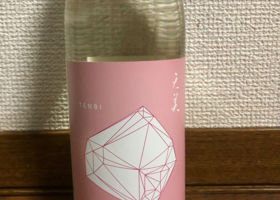
We opened a bottle of "Momoten", a.k.a. "Momoten".
It had more of a slightly effervescent feel than expected, and felt very fresh. It was less grapey than the regular Tenbi, and the bitterness seemed to be slightly more pronounced than the sweetness.
For me, I prefer a more mellow taste, so I am looking forward to seeing how the taste will change in the future since it is a nama-zake.
The bottle was opened yesterday. It is the first bottle of Isshaku-Suisei.
My impression was that it was full, sweet, spicy, and sharp, with a lot of the umami of the rice.
It has a full-bodied sweetness and a dry, crisp taste.
It is also an excellent food sake that does not interfere with meals.
Attracted by the Hidahomare sake rice from Gifu Prefecture, we purchased a bottle and opened it immediately.
When I opened the bottle, the first thing I noticed was the smell of rum.
I first drank it cold, and although I could tell it was a dry sake, I had the impression that it was not very distinctive.
The next time I drank it heated, which is a popular drink at my house, my impression completely changed. The umami, sweetness, slight acidity, and fullness of the rice came out in full force, and since it is basically a dry sake, it did not interfere with the meal at all, making it a very tasty sake that we were very satisfied with.
When I looked online, I found that there were very few stores around here that carried this sake, so I am grateful to the sake gods that I was able to have a chance encounter with it.
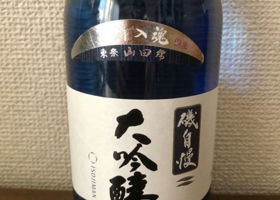
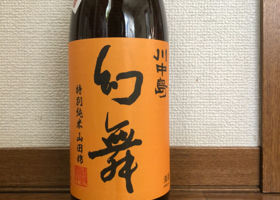
I had just opened a bottle of Isobojimai the other day, but I wanted to drink a sweet sake as well, so I bought this one in a hurry and opened it immediately.
According to what I heard at the liquor store, special junmai sake can be heated up and still taste good, but junmai ginjo and above have a slight odor when heated, so I wondered what to expect. I was not so sure, but I dared to try heating it up, which is my favorite way to drink sake.
The conclusion was that the umami was more pronounced and the strength of the omachi could be felt very well, so I was satisfied with the taste.
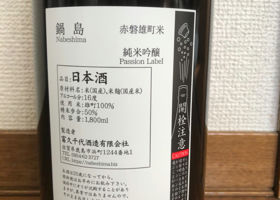
I noticed that Nabeshima had overtaken Shinshu Kamerei to become the No. 2 checked-in ranking in our house.
This is one of the bottles I purchased in the limited edition set at the end of the year.
This is my first bottle of Isojiman.
My first impression of Isojiman was that it was a refreshing sake, since most of the sake I have tasted recently have been relatively sweet and tasty.
As other reviewers have said, it is a sake that goes well with raw fish such as sushi and sashimi.
Today, I drank it with simmered taro and sardines simmered in ume plum paste for Setsubun, and enjoyed the contrast between the refreshing and rich flavors.
I forgot to upload it.
The taste is as good as ever, but this time there is a slight bitterness at the end.
This time, however, the bitterness is stronger at the end.
Taroken konbanhasan konbanhasan.
I was just drinking the same thing😊.
I often forget to upload 💦.
I keep forgetting, so I've decided to upload it when I drink it: ☺️
Thank you for your comment, Eririn.
As I recall, we received your comment when we opened and uploaded this bottle the two previous times.
It's a coincidence that the timing is the same twice. Thank you very much 🤗.
Conveyance of the decision.
I'm sure you're right (⑅ -ᴗ-)۶🍶✨🍶٩٩(-ᴗ-⑅ )
I was thinking of uploading three consecutive reviews of Gensai starting tonight.
This is the first Shinsei in a long time.
This is also one of the bottles that was in the New Year's gift box.
We decided to open this bottle today because we had gratin for dinner.
It has been a really long time, so I am really looking forward to it.
Today, we opened a bottle of this sake that was included in the New Year's gift box. We were a little disappointed that the sake we were looking for was not included in this year's gift box, but we were able to taste the richness of the rice and the crispness of the sake, which made it delicious. It also has a sweet taste, so today I drank it with broiled eel, and I thought it would go well with a sweet and spicy meal.
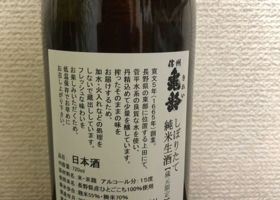
Today, I felt like drinking Shinshu Kamerei, so I decided to open a bottle of this one that I had in stock.
I opened one bottle immediately after purchase and enjoyed it very much, but I am looking forward to seeing how this one will turn out after a little time has passed.
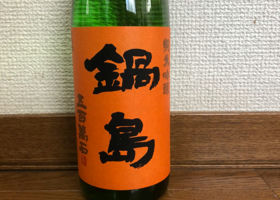
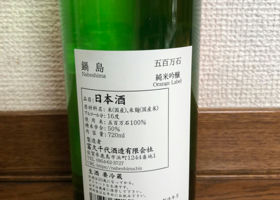
Today, we opened this bottle. This is the first time for us to drink Ihyakumangoku from the Nabeshima lineup.
My impression was that it was more refreshing than I had expected, and that the umami was less pronounced than I had expected for Nabeshima.
As it is a draft sake, we expect the taste to change after the bottle is opened, so we are looking forward to the changes in the future.
I was going to open a bottle of this Ise Jingu limited edition after the new year, but my family insisted and I ended up opening it.
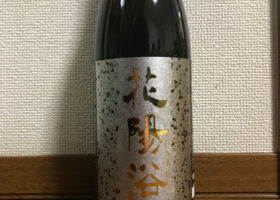
It had not been brewed in a long time, but it was still very tasty, and I was very satisfied with the taste, which was different from the Hana-yosu that I opened the other day.
We drank it while eating oden, crab and soba noodles, and it was very good as a food sake.
Here is this year's last one.
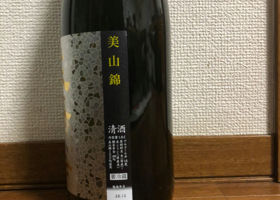
It is a Junmai Daiginjo Miyamanishiki from Hanahayokyu, and it is also an orikara.
The bottle has not been opened yet, but we are expecting a lot from this first Hanaoyokyu in a while.
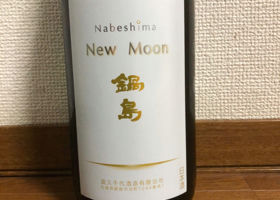
We have opened two bottles of Nabeshima in a row.
Today, we opened this bottle, which is highly rated by word of mouth.
First, I drank it cold. There was not much fizz, just a slight tingling sensation on the tongue. The freshness is fully felt and the sweetness is relatively strong. Since it is a pure sake, you can feel the alcohol taste, but it is not as much as we expected and is quite easy to drink.
After this, I plan to drink it warmed, which is my boom, and I am very much looking forward to seeing what it will look like.