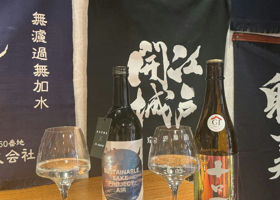
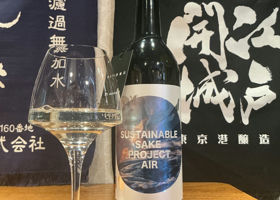
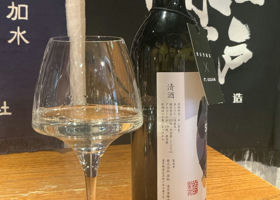
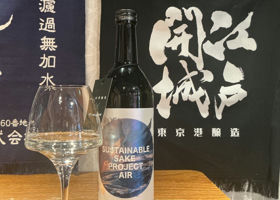
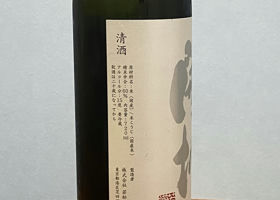
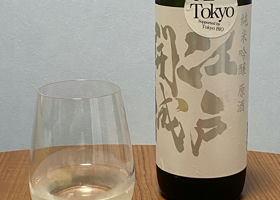
unpasteurized sake
Fruity aroma like grapes
A little bit of sizzle
Light aroma of rice on the nose, with a graininess, but with a fruity flavor.
My favorite strain
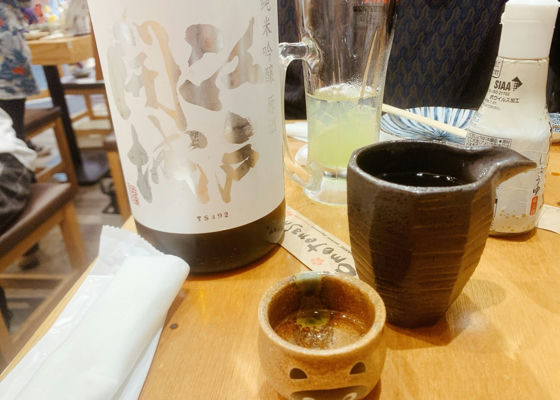
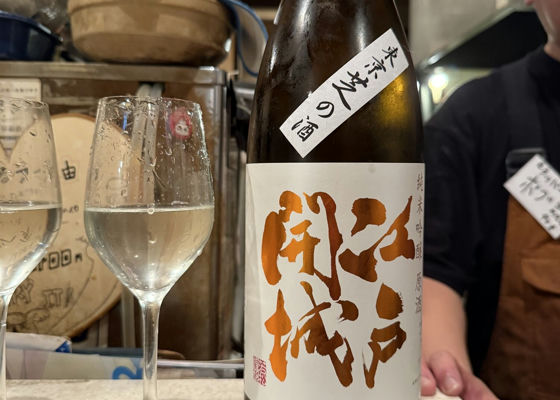
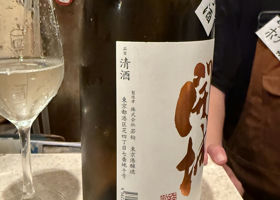
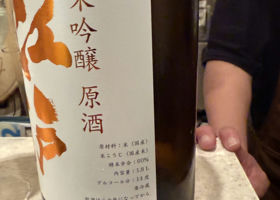
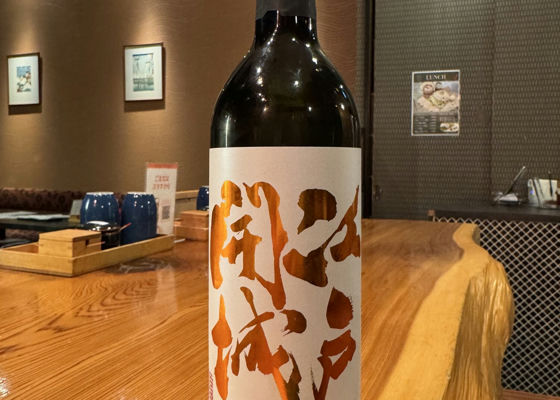
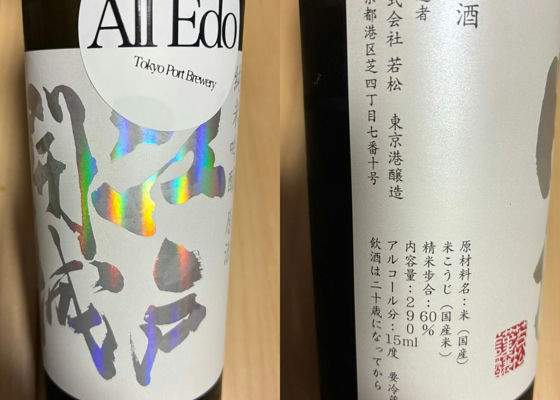
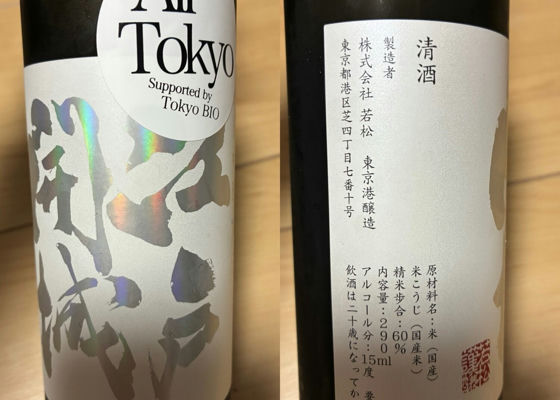
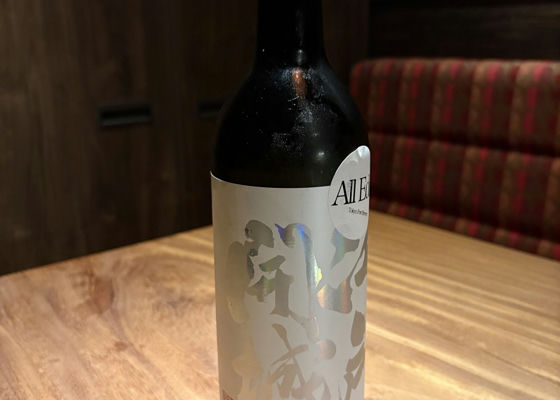
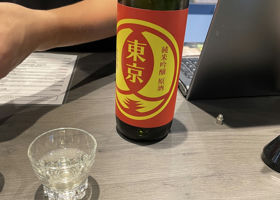
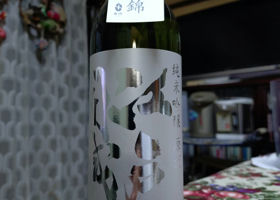
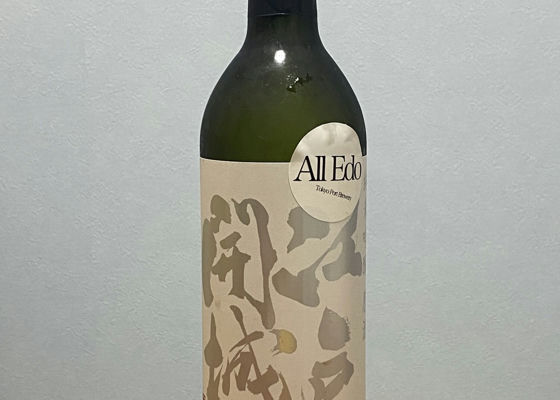
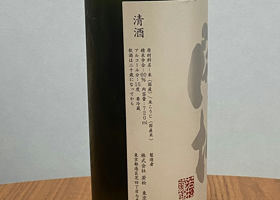
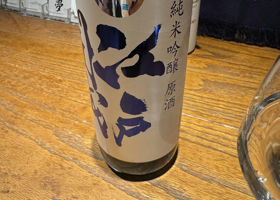
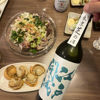
Brand name] Edo Kaijo Junmai Ginjyo Ginsyu Genshu
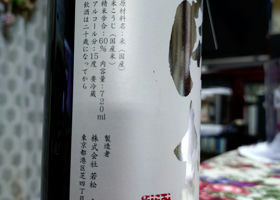
Sake Brewer] Tokyo Minato Brewery (Shiba, Minato-ku, Tokyo)
Type of Sake】Junmai Ginjo (Haraju)
Rice used: Omachi
Rice polishing ratio] 60
Alcohol content】15%.
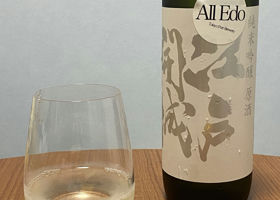
Sake Cup】Wine Glass
Aroma】+1.5
(green apple, muscat, white dumpling, fine lactic acid, rummy nuance)
Appearance] Slightly greenish crystal
[Taste
Body: 1.5
Acidity: 2.0
Sweetness: 1.5
Umami: 1.5
Bitterness: 1.5
Short to medium length.
It is cut off easily by acidity and slight bitterness.
Impression: A modern, light, low-alcohol sake.
The aroma is mild with a fresh fruit aroma. The taste is light but juicy with acidity. The taste is light, but juicy with acidity. I guess the yeast is important. This sake is very precisely and scientifically made.
It is very light and delicious.
Pairing
Soba noodles
Chicken Salt Grilled with Soy Sauce
White meat sashimi
Repeat Score] 2.0
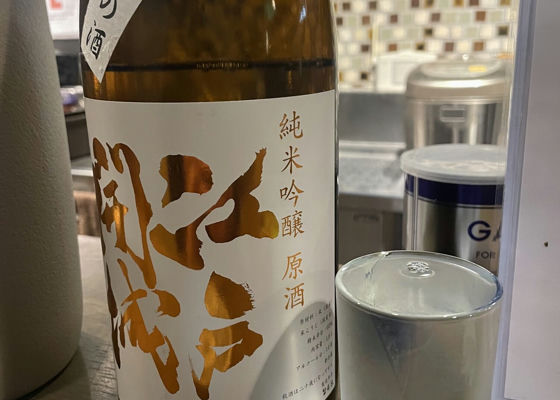
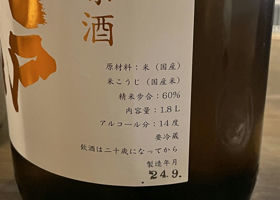
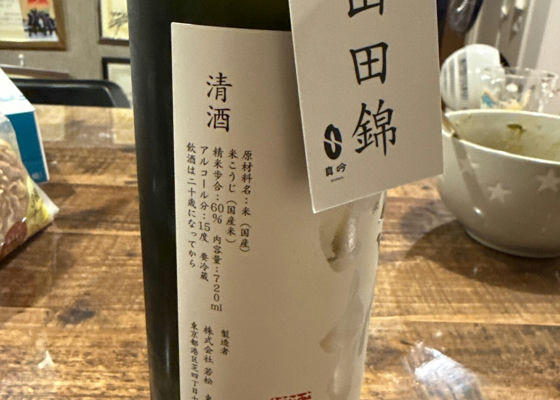
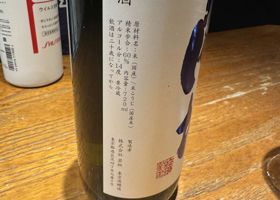
Brand name] Edo Kaijo Junmai Ginjyo Ginsyu Genshu
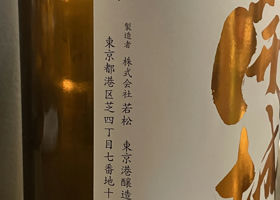
Sake Brewer] Tokyo Minato Brewery (Shiba, Minato-ku, Tokyo)
Type of Sake] Junmai Ginjo (Original Sake)
Rice used: Yamadanishiki
Polishing ratio] 60
Alcohol content】15%.
Sake Cup】Wine Glass
Aroma】+1.5
(green apple, muscat, white dumpling, fine lactic acid, rummy nuance)
Appearance] Slightly greenish crystal
[Taste
Body: 1.5
Acidity: 2.0
Sweetness: 1.5
Umami: 1.5
Bitterness: 1.5
Short to medium length.
It is cut off easily by acidity and slight bitterness.
Impression: A modern, light, low-alcohol sake.
The aroma is mild with a fresh fruit aroma. The taste is light but juicy with acidity. The taste is light, but juicy with acidity. I guess the yeast is important.
It is very light and delicious.
Pairing
Soba noodles
Chicken grilled with salt
White meat sashimi
Repeat Score] 2.0
I've got a lot to post again💦.
Just a month ago, on my way back from a business trip to Tokyo, I visited the brewery of Tokyo Port Brewery.
Lately when I go to Tokyo, I tend to buy Edokaijo, but this time I chose Omachi and Aizan, both of which were new to me, while also having the opportunity to taste them. ☝️
I started with Omachi.
It is delicious, with a refreshing and crisp mouthfeel that is typical of Edo Kaijo, with the delicious flavor of Omachi 😊.
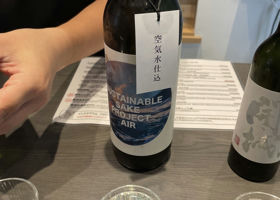
We were also told about the technology used to use tap water for sake, which I think is amazing because it really does have a clear taste comparable to natural water 😳.
I'm looking forward to the Aizan version 🤤.
Hi Hitto 😃
We still have about 3 bottles of alcohol from October 😅 Let's take it easy with each other 🤗.
I'm sure you're right, you're not wasting your business trip to Tokyo on drinking! That's a great idea: ‼️
Good evening Master J&N 😊.
Yes, I will post at my own pace 🤭.
There are a variety of sakes that are usually hard to find in Tokyo, but I just end up choosing this one 😅.
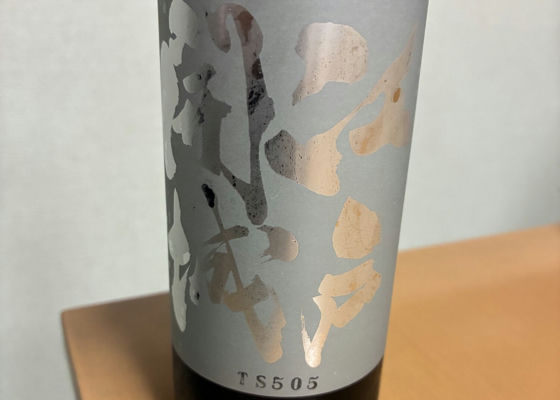
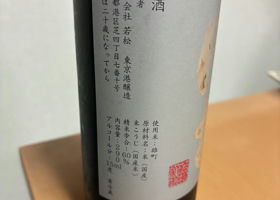
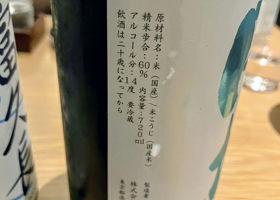
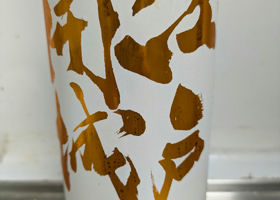
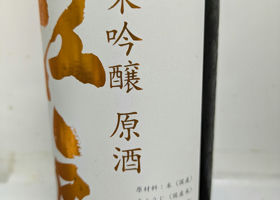
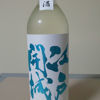
Brand name] Edo Kaijo Junmai Genshu
Sake Brewer] Wakamatsu Corporation (4-7-10 Shiba, Minato-ku, Tokyo / Tokyo Minato Brewery)
Type of sake] Junmai-genshu
Type of Sake: Junmai Genjyu (pure rice)
Rice polishing ratio] 60
Alcohol content】14%.
Sake Cup】Tasting cup
Aroma】+2(green apple, melon, steamed rice, pineapple, rumney)
Appearance] Slightly yellowish crystal
[Taste] [Mouthfeel
Body: 1.5
Acidity: 2.0
Sweetness: 1.5
Umami: 1.5
Bitterness: 1.5
Short to medium length. Lightly tightened by acidity and a hint of bitterness.
Impression: Modern sweet and sour.
The aroma of green apple and pineapple is clearly detectable, along with a mild sweet aroma derived from the rice. The taste is full of malic acid and citric acid, and you can sense the influence of the yeast more than the rice. The fact that the sake is made at 14 degrees Celsius makes it a highly intelligent and scientific sake. Bravo!
Pairing] White fish sashimi, tempura salt, cold tofu, grilled vegetables.
Repeat Score] 2.0
Score: 4.0
Rice polishing ratio: 60
Sake rice: Kyoto-grown
Alcohol content: 15%.
Vintage: 2025.10
The aroma is more floral than that of All Tokyo. The color is almost transparent with a slight amber tinge. The aroma is of melon, banana, and lilies.
The acidity is soft and the alcohol content is high enough to give a sweet aftertaste.
The aftertaste is rather long.
Score: 3.8
Rice polishing ratio: 60
Sake rice: Rice grown in East Kyoto
Alcohol content: 15
Vintage: 25.10
It is said to be made with yeast from bees in Hibiya Park (Tokyo yeast).
The color is almost transparent, and the sake level seems a little high.
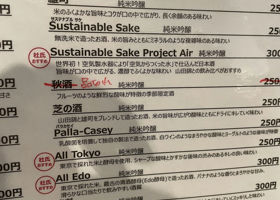
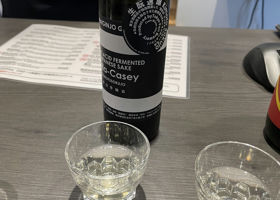
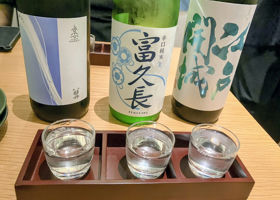
Summer vacation for a forty year old man. My wife and I went to a tasting at Tokyo Port Brewery, where we could sample almost all brands for about 250 to 600 yen. I was most impressed with Palla-Casey, as I have been enjoying classical sake, especially autumnal sake. I was impressed by its refreshing yogurt-like acidity. The sake brewed with Tokyo tap water and the sake brewed with water extracted from Tokyo air were both unexpectedly delicious. The only thing that caught my attention was the rather high price range.
Thank you for your comment, Jay & Nobby.
When I told my wife that the brewing water was Tokyo tap water, she raised her eyebrows and asked, "Does it taste good?" 💦.
I have to admit that I was a little apprehensive before I actually drank it💦.
Edo Kaijo Junmai Ginjo Ginsyu Genshu Harajishiki Yamadanishiki
Rating 4.4
100% Yamadanishiki rice, 60% polished rice, 15% alcohol by volume, -1 to +2 sake alcohol by volume (depending on the tank), 1.4 to 1.7 acidity by volume (depending on the tank).
It has a fresh mouthfeel with a good balance between the umami and fruity flavors of Yamadanishiki. Light melon aroma. The acidity is also well pronounced with a nice finish. Convergence is light and dry.
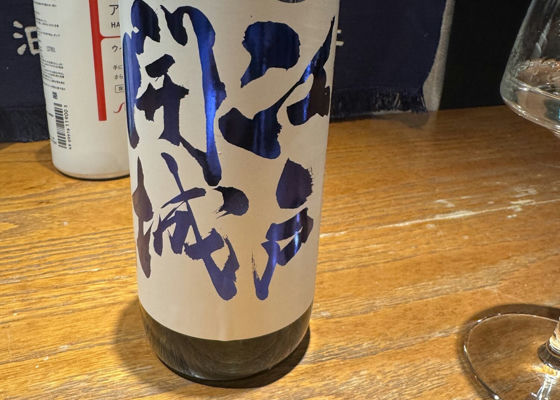
Comparison of Edo Kaikyo drinks. This is Edo.
It is said to be made with Tokyo-grown rice and 100-year-old yeast, said to be the oldest in Japan.
The aroma has a hint of acidity. Banana and pear.
The taste is sweet, but not as sour as the aroma.
It is thick and has a strong umami. The color is a little yellow.
I prefer this one because Tokyo is more dry,
I prefer this one.
Brewing sake in a building in Tokyo's 23 wards with Tokyo tap water.
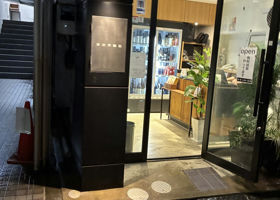
On a hot and humid day in July, I went to the brewery store to find out what kind of place it was.
It was in a cozy building in a narrow alley off a main street. They make sake in a place like this?
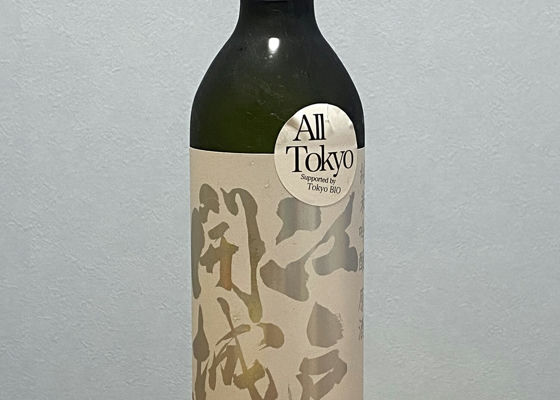
We compared "All Tokyo" and "All Edo" from Edo Kaijo.
First, Tokyo.
Tokyo yeast is collected from bees in Hibiya Park. The aroma is sweet vanilla.
The aftertaste is spicy with a hint of sourness. There is little bitterness. It is crisp and dry with a nice crispness.



 日本酒原価酒蔵(東京都品川区)は、江戸開城を醸す東京港醸造(東京都港区)とのコラボ商品「TOKYO CLASSSAKETIMES | 日本酒をもっと知りたくなるWEBメディア
 2016年8月、東京・港区の芝にある4階建てのビルで、新しい日本酒が誕生しました。その名も「江戸開城」。190SAKETIMES | 日本酒をもっと知りたくなるWEBメディア
 東京23区内の唯一の酒蔵として知られる東京港醸造(東京都港区)は、空気から水を生成する技術を活用した“空気水仕SAKETIMES | 日本酒をもっと知りたくなるWEBメディア